Whether you are new to camping, or a seasoned camper with a new tent, knowing how to put your tent up properly is vital and can not only save you a lot of time but probably some frustration as well.
Tents come in a wide range of sizes, styles and types, and even if you have plenty of experience when it comes to erecting tents you will find that each one has a particular order in which things should done in order to make the process as quick as possible. But don’t worry, while every tent may look different, there are some tricks that will remain the same when it comes to putting up your tent. Here, we’ve included some general tips for putting up a tent that could make your next camping trip a breeze.
Read the instructions
The first and most important thing to do before putting up your tent is to read the instructions. Each tent should have its own set of instructions and these are usually found in the tent bag. Remember to keep them safe once you have read them as you may need to refer to them again in the future. It can be a good idea to read these before you go on your first camping trip and check that everything you need is in the tent bag.

Deciding where to pitch your tent
Before you begin putting your tent up you will want to choose the best place to put it. If you don’t, this could mean the difference between a great night’s sleep and having a really rough night.
Make sure that you check the ground on your pitch for any stones and other sharp objects such as tree roots. These have the potential to damage the underneath of your tent but could also cause you an extremely uncomfortable night’s sleep. Where possible it is not advisable to camp on a slope, if your pitch is quite uneven then look for the least steep section for your tent. It is also not a good idea to camp in a dip – if it rains you will find yourself in a puddle!
Where possible it is a good idea to use a footprint. These are included with some tents when you purchase them but can also be purchased separately. A footprint is a groundsheet that lies between the ground and your tent, and not only does it act as an additional layer to help protect the base of your tent from the ground but you can use it to work out where to put your tent.

General tips
Here are a few general tips that apply to most tents:
- Tent poles on most modern tents are colour coded, this will help you when it comes to putting up the tent, so it is worth taking a couple of minutes before hand to sort them out properly
- Don’t rush when it comes to putting your tent up. You’ll want to ensure that you peg it out properly. The fabric should be taut so that it doesn’t flap in the wind but without putting too much strain on the material
- Zip up the doors before you start
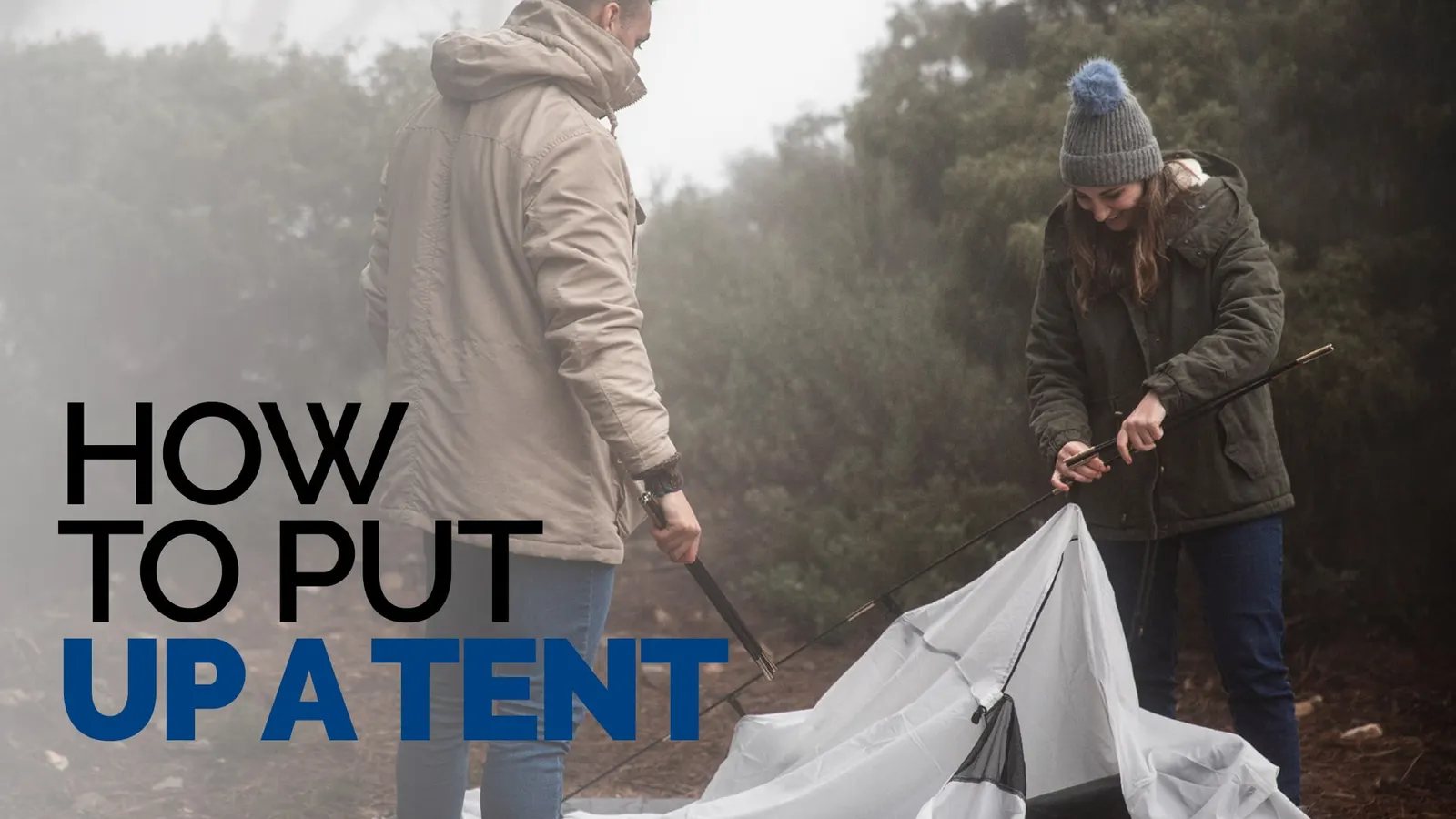
- Take care when feeding the poles through the sleeves and push them rather than pull as this will prevent them coming apart in the sleeve or snagging
- If your tent has separate bedroom compartments, leave these until you have put up the rest of the tent and pegged it out
- If you have an inflatable tent, make sure that you do not over inflate the tubes, as this could cause damage to the tent
- Campsites can be very dark at night so it can be a good idea to purchase a set of glow in the dark guide ropes to replace those at the corners of your tent. This will alert people to the location of your tent and ensure that they don’t trip over them during the night.

Taking your tent down
In general, the process for taking most tents down is exactly the reverse of putting them up. Here are a few tips to help you.
- Take care when removing your tent pegs from the ground, as they can often be difficult to remove
- Tent poles can spring up when removed from their fastening, so hold onto them to avoid damaging them or yourself.
- Work carefully, and remember to put take the time to put each element of your tent away properly
- If possible, leave bedrooms in situ, this will make putting up your tent a much quicker process next time
- Fold your tent up carefully, making sure that you brush off any dried mud or leaves
- Roll the fabrics up tightly so that you can fit them back into the storage bag.
- Check that you have all your pegs, poles and guy ropes included in the bag
Of course, if you are taking your tent down in the wet then you may prefer to just pack it into your car as best you can in order to deal with at home. Once you arrive home you should unpack it straight away and dry it out fully, otherwise the fabrics will develop mould spots. If you are not going camping for a while you may also like to clean off your tent pegs and check if you need to replace any before your next trip. It might also be time to consider waterproofing your tent if it’s not been done in a while.
Taking the time to put your tent away properly after each use will help to keep it in the best possible condition, allowing you to use it for longer before you need to replace it.
We hope we’ve covered all that you need to know about putting up a tent, but if you have any further questions relating to camping or tents, why not get in touch and tell us what other advice you’d like to see on our blog?